Import QIF into QuickBooks Online: convert QIF to QBO
QuickBooks Online imports OFX, QBO and CSV files. Convert your QIF file to QBO first, then import it. Read the full QuickBooks Online import guide.
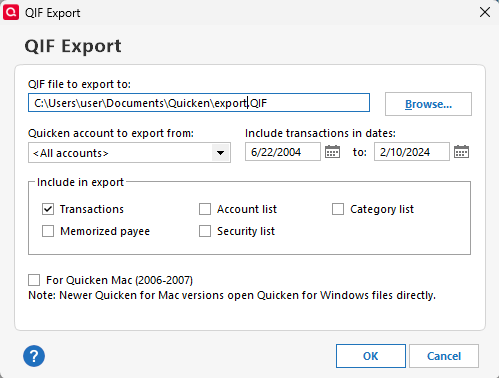
What is a QIF file
QIF is plain text with no transaction IDs and no account number, so apps can't use it to detect duplicates. Avoid converting the same period twice. Its dates can be ambiguous, such as 03/04/26, so confirm the date format in the app. QIF can carry categories, which are useful when the output needs expense and income accounts.
What is a QBO file
QBO is the Web Connect format QuickBooks uses for bank downloads. The name doesn't mean QuickBooks Online, but QuickBooks Online imports it. It holds the date, amount, payee, memo, check number and a transaction ID. More about QBO.
Why convert QIF to QBO
QuickBooks Online doesn't import QIF. A QBO file gives it the payee, memo and check number, and a transaction ID on each row, so transactions already imported are skipped.
Before you import: check the account in QuickBooks Online
QuickBooks Online keeps your data online, so there is no company file to back up. Check that the account exists under Banking and look at what is already imported for this period.
Step by step: convert QIF to QBO
- Download, install and start ProperConvert. The trial is free.
- Open your QIF file.
- Review the transactions to see how the app read your file. Check that the dates are correct, and that expenses are negative and deposits (payments to the account) are positive. The "Change +/-" button reverses the signs for the whole file, for bank and credit card accounts alike.
- Set the QBO settings below.
- Click Convert, then confirm the file name and location.
Set the QBO output settings
In the QBO/QFX/OFX tab on the right sidebar, set the file type to QBO, then set:
- Account ID: digits only. Use the same ID for every file of one account and a different ID for each account.
- Account type: checking, savings or credit card. It must match the account you import into.
See all QBO settings.
Import the QBO file into QuickBooks Online
- Sign in to QuickBooks Online and click Banking.
- Select the account you want to import into, then click File upload.
- Click Browse, select the QBO file, click Open, then Next.
- Check what QuickBooks read from the file: the file name, account ID, account type and date range.
- Select the QuickBooks account to import into and click Next.
- Click Let's go! to finish.
- Open the For Review tab, select a payee, confirm the category and click Add for each transaction.
See the QuickBooks Online import guide for more.
QuickBooks Online QBO questions
Why use QBO instead of CSV?
From a CSV, QuickBooks Online reads only the date, the amount and one description. From QBO it also reads the payee, memo and check number, and uses the transaction ID to skip transactions that were already imported.
Does a QBO file mean QuickBooks Online?
No. A .qbo file is a Web Connect file, and both QuickBooks Desktop and QuickBooks Online import it.
Does QuickBooks Online import IIF?
No. IIF is a QuickBooks Desktop format.
Related QuickBooks Online conversions
- Import PDF into QuickBooks Online: convert PDF to QBO
- Import CSV or Excel into QuickBooks Online: convert CSV or Excel to QBO
- Import OFX into QuickBooks Online: convert OFX to QBO
- Import QFX into QuickBooks Online: convert QFX to QBO
- Import QIF into QuickBooks Online: convert QIF to OFX
- Import QIF into QuickBooks Online: convert QIF to CSV
- Import MT940 into QuickBooks Online: convert MT940 to QBO